


Christian Foundations | The Christian Life

Kevin Hardy • Lead Pastor | Elder
November 5, 2026

4 Minute Read

Walking with Christ

What comes to mind when you think about living the Christian life?

I suspect many of us think first about the things we do. We read our Bibles. We pray. We gather with the church. We serve others and seek to obey God’s Word. All of those things matter. But to understand why they matter, we need to begin with what God has done for us in Jesus Christ.

That’s where we began in Monday School this week. In Colossians 2:6, Paul writes, “Therefore, as you received Christ Jesus the Lord, so walk in him.” Think about that for a moment. How did we receive Christ? By faith. And how do we go on walking with Him? By faith. We begin by trusting Christ, and we continue by trusting Him.

So what does that look like? We considered three things that belong together in the Christian life. We believe in Christ, we belong to Christ, and we’re becoming like Christ.

Believing in Christ

The gospel is first of all good news to be believed!

What we believe about God shapes how we live before Him. That’s why doctrine matters. Scripture teaches us who God is, what He has done to save us, and what He promises to do. The Apostles’ Creed, which we looked at in class, gives us a short summary of some of what Scripture teaches about the Father, the Son, and the Holy Spirit.

At the heart of the creed is Jesus Christ, the Son of God, who became man, died for our sins, and rose again. He’s the one we’re trusting to save us.

One distinction we made in class is worth remembering. Justification is God declaring us righteous through faith in Christ. Sanctification is His ongoing work of making us holy. Glorification is the completion of His saving work when Christ returns and raises His people. Knowing the difference helps us when we’re discouraged by how slowly we seem to grow. Our standing before God rests on Christ’s finished work, and we can trust God to finish the work He’s begun in us (Philippians 1:6).

Belonging to Christ

Jesus gives us a picture of what it means to belong to Him in John 15. He is the vine, and we are the branches. A branch draws its life from the vine. In the same way, we depend on Christ for the whole of our Christian lives.

That helps us see why we read Scripture, pray, and gather as the church. These are ordinary ways God strengthens our faith as we learn to depend on Christ together.

In the Lord’s Prayer (Matthew 6:9–13), Jesus gives us both a prayer to pray and a pattern for prayer. We praise God for who He is. We pray for His kingdom to come and His will to be done. We ask Him to provide for our needs. We confess our sins and ask Him to forgive us, even as we forgive others. And we ask Him to protect us from temptation and evil. Because of Jesus Christ, we can bring all of this to God as our heavenly Father.

Becoming Like Christ

What does God’s grace do in the life of a Christian? In Titus 2:11–14, Paul says that the grace that brings salvation also trains us. It teaches us to turn away from sin and to live godly lives as we wait for Christ to return.

In class, we also looked at the Ten Commandments. Jesus is the one who saves us, and God’s law shows us why we need Him. It reveals God’s holy character, exposes our sin, and shows us what obedience looks like. Jesus sums up the law in two commands. Love God with all your heart, soul, and mind, and love your neighbour as yourself (Matthew 22:37–40). As we become more like Christ, that love begins to shape how we speak, serve, and treat the people around us.

So where do you need to trust Christ and take a step of obedience this week? Bring that to Him in prayer. The same Saviour you trusted at the beginning is the one you can depend on today.

Pastor Kevin
Up Next
From this Collection: From the Pastors
November 19, 2026 • 3 Minute Read
Mexico Vision Trip Recap
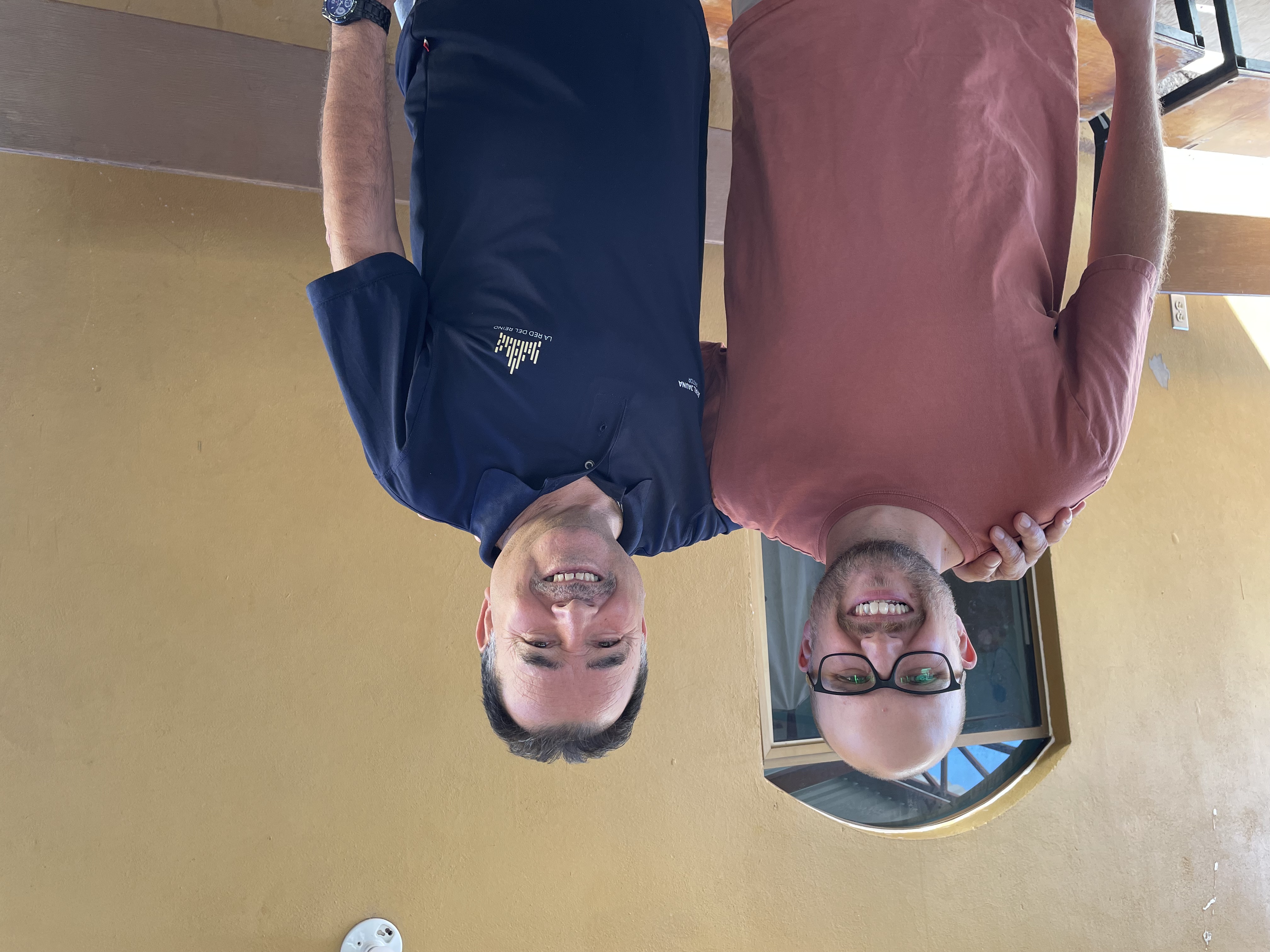
From October 9–17, Les Harder and I travelled to San Carlos, Sonora, Mexico, to visit our missionaries, Denver and Katie Janz, and see firsthand the work of Centro Educativo Cristiano (CEC). CEC invited its ministry partners to come and see what God is doing through the school and hear about its vision for ministry. Vision: To collaborate with the church in fulfilling the Great Commission through workers empowered by the Scriptures. Mission: To offer access to Biblical training to equip and train inspired workers to live and proclaim the Gospel in their families, churches, and communities. While we were there, we spent time with Denver and Katie and others who work at the school. We also visited the small fishing town of El Choyudo, where we attended a church service, heard some testimonies, and capped off the visit with some delicious shrimp tacos! It was especially meaningful for Les, who had taken short-term youth trips to the area several years earlier. We also visited several local pastors and heard about some of the challenges their communities face, including poverty and drug use. It was encouraging to hear how their churches care for children and help them understand the gospel. We also got to see the fruit of CEC’s work as pastors put their training to use teaching the Bible in their churches. One visit that has stuck with me was our time with Pastor Dico, a former CEC student who serves in Maytorena. As we listened to his story, I was struck by how we share the same mission of making disciples, even as we face different challenges. Hearing what led Dico to Bible school made me think about our own church. How are we helping people at SCC grow in their knowledge of Scripture and learn to make disciples? I also came home reminded of how important our ministry to children and youth is. The kids we serve may face different challenges, but they share the same need to hear and be transformed by the gospel. Thank you to everyone who prayed for Les and me while we were in Mexico. Please keep praying for Denver and Katie and the CEC team as they train students to serve in local churches. And pray for Pastor Rafael in Fátima and Pastor Dico in Maytorena as they share the gospel with children in their communities. Pray that these kids would come to know Jesus and have people in their lives who will help them follow Him. Pastor Kevin
November 10, 2026 • 5 Minute Read
Christian Foundations | The Church
What do you think of when you hear the word, church? Sometimes our use of this word adds to the confusion of what it means. Is the church just the building, like when we say “let’s drive over to the church.” Is it a social club to be a part of like, like when we ask “which church are you from?” Is it just something for us to take in and assess by throwing around questions like, “what did you think of church today?” This week we wrapped up our Christian Foundations course by considering what the church is, what it does, and who it is for. What the church is. The Greek word for church, ekklesia, simply means, “assembly”. The church assembles or gathers in two different ways, often referred to as the heaven assembly and the earthy assembly. The heavenly assembly speaks to the universal church: all those who have entered into the new covenant by faith in Christ (Romans 10:9-10). The earthly assembly speaks to the local church: members of the universal church who gather together regularly (Acts 2:42-47). Through the Bible we see the church referred to as God’s chosen people (1 Peter 2:9-10), the bride of Christ (Ephesians 5:22-33), and as God’s plan for reaching the world with the gospel message (Matthew 5:14-16, 28:18-20). These passages help us gain a fuller sense of what God intended for the church to be. What the church does. When we consider the function of the church, we’re often doing so in the local context. For this, Jonathan Leeman offers a great definition: “A local church is a mutually-affirming group of new covenant members and kingdom citizens, identified by regularly gathering together in Jesus’ name through preaching the gospel and celebrating the ordinances.” The church gathers together under the establishing work of Christ. Those who are a part of it belong to the family of God and are called to live out this new identity together. Gathering with one another is necessary to encourage one another, exhort one another, and to remind one another of the day that is to come when Christ will return, judge sin, and make all things new (Hebrews 3:12-13, 10:24-25). When we gather together as the people of God, we remember the gospel. We do this by singing the gospel, hearing the gospel preached, and rehearsing the gospel through the ordinances. Singing the gospel: The church gathers to declare the truths of the gospel to one another in corporate worship. This is why the songs that we sing matter! We are teaching and reminding one another of what is true as we sing together. Hearing the gospel: The church gathers to hear the truths of the gospel preached through the pastor’s sermon. At SCC, we often spend weeks walking through entire books of the bible, seeing how the whole story of the Bible points to Jesus. Rehearsing the gospel: Christ gave the church two ways of visualizing and remembering his work on the cross. Through the ordinances of baptism and communion, we see the gospel on display. Going down into and coming up from the waters of baptism are the way we identify with Christ in his death and resurrection. Taking the bread and the cup during communion causes us to reflect on Christ’s body that was broken for us and his blood that was spilt on our behalf. Who the church is for. If you were asked the question, “who is the church for?”, you would probably answer, everyone! This isn’t an incorrect answer. All are welcome to come, hear the good news, and are invited to respond to it. However, when we consider who the church and what the church does, we are reminded that the gathering of the church is primarily for those who profess faith in Christ! Christians gather to scatter. When we meet with one another, the purpose is to bring glory to God, to be encouraged and built up in our faith, and to be matured and trained as disciples so that we can spread out to our own areas of influence equipped to reach our families, friends, neighbours, and co-workers with the message of the gospel. Is this why you gather with the church? There are a lot of great parts to Sunday morning. We’re in the room with our friends, there’s great coffee, and you might even hear your favourite song. But there’s more that is taking place as you meet with God’s covenant people. As you participate and become a member in the local church, you are showing that you belong to the universal church - a set apart people that will one day gather - every nation, tribe, and tongue - in God’s presence for eternity. As you go out into the rest of your week, you are given the opportunity to declare the good news of Christ. He has died. He has risen. And he will come again. Would we follow him together in the meantime. Pastor Connor
November 5, 2026 • 4 Minute Read
Christian Foundations | The Christian Life
Walking with Christ What comes to mind when you think about living the Christian life? I suspect many of us think first about the things we do. We read our Bibles. We pray. We gather with the church. We serve others and seek to obey God’s Word. All of those things matter. But to understand why they matter, we need to begin with what God has done for us in Jesus Christ. That’s where we began in Monday School this week. In Colossians 2:6, Paul writes, “Therefore, as you received Christ Jesus the Lord, so walk in him.” Think about that for a moment. How did we receive Christ? By faith. And how do we go on walking with Him? By faith. We begin by trusting Christ, and we continue by trusting Him. So what does that look like? We considered three things that belong together in the Christian life. We believe in Christ, we belong to Christ, and we’re becoming like Christ. Believing in Christ The gospel is first of all good news to be believed! What we believe about God shapes how we live before Him. That’s why doctrine matters. Scripture teaches us who God is, what He has done to save us, and what He promises to do. The Apostles’ Creed, which we looked at in class, gives us a short summary of some of what Scripture teaches about the Father, the Son, and the Holy Spirit. At the heart of the creed is Jesus Christ, the Son of God, who became man, died for our sins, and rose again. He’s the one we’re trusting to save us. One distinction we made in class is worth remembering. Justification is God declaring us righteous through faith in Christ. Sanctification is His ongoing work of making us holy. Glorification is the completion of His saving work when Christ returns and raises His people. Knowing the difference helps us when we’re discouraged by how slowly we seem to grow. Our standing before God rests on Christ’s finished work, and we can trust God to finish the work He’s begun in us (Philippians 1:6). Belonging to Christ Jesus gives us a picture of what it means to belong to Him in John 15. He is the vine, and we are the branches. A branch draws its life from the vine. In the same way, we depend on Christ for the whole of our Christian lives. That helps us see why we read Scripture, pray, and gather as the church. These are ordinary ways God strengthens our faith as we learn to depend on Christ together. In the Lord’s Prayer (Matthew 6:9–13), Jesus gives us both a prayer to pray and a pattern for prayer. We praise God for who He is. We pray for His kingdom to come and His will to be done. We ask Him to provide for our needs. We confess our sins and ask Him to forgive us, even as we forgive others. And we ask Him to protect us from temptation and evil. Because of Jesus Christ, we can bring all of this to God as our heavenly Father. Becoming Like Christ What does God’s grace do in the life of a Christian? In Titus 2:11–14, Paul says that the grace that brings salvation also trains us. It teaches us to turn away from sin and to live godly lives as we wait for Christ to return. In class, we also looked at the Ten Commandments. Jesus is the one who saves us, and God’s law shows us why we need Him. It reveals God’s holy character, exposes our sin, and shows us what obedience looks like. Jesus sums up the law in two commands. Love God with all your heart, soul, and mind, and love your neighbour as yourself (Matthew 22:37–40). As we become more like Christ, that love begins to shape how we speak, serve, and treat the people around us. So where do you need to trust Christ and take a step of obedience this week? Bring that to Him in prayer. The same Saviour you trusted at the beginning is the one you can depend on today. Pastor Kevin

October 29, 2026 • 4 Minute Read
Christian Foundations | The Bible
This week we continued on in our Christian Foundations class, looking at the Bible and it’s importance to the life of a believer. So much about what we need to know about the Bible is told to us in 2 Timothy 3:14-17: But as for you, continue in what you have learned and have firmly believed, knowing from whom you learned it and how from childhood you have been acquainted with the sacred writings, which are able to make you wise for salvation through faith in Christ Jesus. All Scripture is breathed out by God and profitable for teaching, for reproof, for correction, and for training in righteousness, that the man of God may be complete, equipped for every good work. (2 Tim. 3:14-17) From this text, we spent time together on Monday night considering three questions and four implications. Questions What is the Bible? Where did it come from? How can I trust it? Implications The Bible is trustworthy. The Bible is knowable. The Bible is necessary. The Bible is enough. Now, I won’t make you read through all of my notes from this class. We took time to look at the overview of the Bible, learn about how the canon of Scripture was put together, and learned about textual criticism and how the Bibles we have today are accurate copies of the originals. It’s pretty amazing stuff! But today, I’d love for you to consider these four, beautiful implications, which should cause us to dive deep into the Word of God! The Bible is Trustworthy God’s Word is inspired. This means that while it was written by over forty different human authors, they were all guided by the Holy Spirit in their writings. God himself is the main author. All of Scripture is breathed out by him. God’s Word is inerrant. There are no mistakes or contradictions in it. God himself is incapable of lies; incapable of error. Therefore, the same is true of his Word. God’s Word is infallible. It is reliable and trustworthy. It will not mislead or deceive you. It cannot fail. The Bible is Knowable God’s Word is for you. The Bible is for every believer! It’s not just something for the scholar to study or the pastor to preach from. It is personal and for you. God’s Word is clear. Without a doubt, the bible takes time and effort to read and study. However, we are not left in chaos or confusion by it. You can pick it up right now, know it, and learn from it. God’s Word points to him. We would be amiss if the study of God’s Word doesn’t lead us to him. The Bible is knowable, and therefore our Heavenly Father is knowable through it! The Bible is Necessary God’s Word guides. Psalm 119:105 says that “Your word is a lamp to my feet and a light to my path.” When we are in need of direction and do not know where to go, God give us his Word to help us follow him. It’s profitable for us. God’s Word protects. The Word of God ought to be the sole authority of our lives. It acts as a safeguard for us, giving us boundaries to live within. These are not boundaries meant to rob us of our freedom, but rather to correct us, care for us, and guard us. God’s Word saves. The Bible tells the story of the good news of the gospel. Our rescue from sin and our continued sanctification are wrapped up in its pages as they make us wise for salvation in Christ Jesus! The Bible is Enough God’s Word is sufficient. The Bible contains all that we need for life and godliness. There is no future revelation to wait for and no other source of knowledge to find. The Word of God is all you need! God’s Word speaks. Sometimes we get frustrated in our Christian life, wishing that the voice of God would tell us what to do. But he already has! God has spoken through his Word and he continues to do so. The Holy Spirit who dwells in us as believers continues to guide us and help us understand it. God’s Word reveals. Likewise, we do not need to wander through life aimlessly, wishing that God’s would reveal His will to us. He has shown us his will in his Word. What a joy it is that God has given us his Word. Would we read it, be equipped by it, memorize it, and follow it. Pastor Connor
October 22, 2026 • 3 Minute Read
Christian Foundations | The Gospel
The late R.C. Sproul writes in Essential Truths of the Christian Faith, “Every Christian is a theologian. We are always engaged in the activity of learning about the things of God. We are not all theologians in the professional or academic sense, but theologians we are, for better or for worse.” Sometimes we can think doctrine or theology is solely for the classroom and find ourselves thinking, “All I need to know is Jesus.” To that, Sproul asks, “Well, who is Jesus?” As soon as we begin answering that question, we’re doing theology! We’ve begun Christian Foundations at Monday School, looking at the gospel, the Bible, the Christian life, and the church. Why spend time on these subjects? Well, for exactly the reason outlined above. These are all theological topics, and theology is simply the study of God. The truths that bring us to faith in Christ are truths we need throughout the Christian life. These foundations matter for every Christian. Think about your own walk with the Lord and the different seasons you have gone through. New believers need to understand the faith they’ve embraced. Longtime believers need to keep deepening their understanding and learning to live in light of it. Years of attending church don’t automatically mean we can clearly explain what we believe. Our first class this past Monday looked at the gospel. There we looked at who God is, humanity and the problem of our sin, what Christ has accomplished, and our response of repentance and faith in what Christ has done. Timothy Keller gives good insight into the importance of understanding the gospel and its implications for the Christian life. In Center Church, he writes: “The gospel is not just the ABCs but the A to Z of the Christian life. It is inaccurate to think the gospel is what saves non-Christians, and then Christians mature by trying hard to live according to biblical principles. It is more accurate to say that we are saved by believing the gospel, and then we are transformed in every part of our minds, hearts, and lives by believing the gospel more and more deeply as life goes on (see Rom 12:1–2; Phil 1:6; 3:13–14).” The gospel continues to shape our confidence before God, our repentance, and our relationships. We need it as much today as we did on our first day following Jesus. These truths help us trust God in suffering, recognize error, resist temptation, and explain our hope to others. The aim is to know God and follow Him faithfully. So, in light of this, I would encourage you to ask yourself the question: “Could I explain the gospel clearly to someone else?” Go and revisit a passage such as 1 Corinthians 15:1–4 and discuss it with someone. You are welcome to come to Monday School next week as we look at the Bible and what it means to listen to God’s Word. In Colossians 2:6–7, we read, “Therefore, as you received Christ Jesus the Lord, so walk in him, rooted and built up in him and established in the faith, just as you were taught, abounding in thanksgiving.” The challenge for us as believers is to continue walking in the Christ we have received, rooted and built up in Him. Pastor Kevin
October 15, 2026 • 4 Minute Read
Opening the Bible Together
Last week, I encouraged us to consider a simple question: What would it look like if Christians throughout our church were regularly opening their Bibles together? Maybe you’ve thought of someone you could ask to do this with. But another question might be holding you back: What would we actually do when we sit down? You don’t need to prepare a lesson or have all the answers. You can open your Bibles, read a passage, and work through it together. A few simple questions can help guide the conversation. In our recent Monday School classes, we explored two approaches recommended in David Helm’s One-to-One Bible Reading: the Swedish Method and COMA. Both give us a starting point for reading carefully, understanding what God has said, and responding in faith and obedience. The Swedish Method Light Bulb → Question Mark → Arrow This approach uses three simple symbols to guide your reading: a light bulb, a question mark, and an arrow. Start by reading a passage aloud together. Then take a few minutes to read it again individually, noting something beside each symbol. A light bulb: What stands out? This should be something that 'shines' from the passage – whatever impacts you most, or draws your attention. A question mark: What don’t I understand? Anything that is difficult to understand in the text, or a question the reader would like to ask the writer of the passage or the Lord. You don’t have to hide your questions or pretend you understand everything. Bring them into the conversation and look carefully at the passage together. An arrow: How does this apply to me? Ask how you are to respond. Something in the passage that connects personally to your life. How does this passage call you to trust God, turn from sin, love someone, or change the way you think and live? After taking a few minutes individually, share what you’ve noticed. Keep returning to the passage as you talk. The aim is to understand and respond to what God has actually said. The COMA Method Context → Observation → Meaning → Application COMA provides four headings to guide your conversation: Context, Observation, Meaning, and Application. Context: Where does this passage fit? Consider what comes before and after it. Who is writing or speaking? Who is being addressed? Reading a few surrounding verses can help us avoid taking a statement out of context. Observation: What does the passage say? Look closely at what is there. Who is involved? What happens? Are there repeated words, commands, promises, or contrasts? Take time to notice the details. Meaning: What does the passage mean? What is the author communicating to the original readers? How do the details fit together? Try putting the main point into a sentence, checking that it reflects the passage. Application: How should we respond? Having considered its meaning, ask how this part of God’s Word should shape your beliefs, desires, words, and actions. Is there a promise to trust, a sin to confess, or an example to follow? Be specific, and pray for God’s help to respond. Give It a Try These methods are just a couple of ways to get you into God’s Word with someone else. So, choose whichever approach helps you get started. Ask God to help you understand His Word, read the passage, and use one of these methods to guide your conversation. Finish by praying about what you’ve learned. We still have copies of David Helm’s One-to-One Bible Reading available at the church if you would like more guidance. Remember, you don’t need to be an expert! Simply think of one person, arrange a time, and open the Bible together. Pastor Kevin
October 8, 2026 • 4 Minute Read
Growing Together in God's Word
What would it look like if Christians throughout our church were regularly opening their Bibles together? This is the broader question behind our recent Monday School class on One-to-One Bible Reading. There is much to be thankful for at SCC. We've talked about the church's mission to glorify God by making disciples, and we've recognized that every member has a role to play in that endeavour. We also have many ways to be involved in the life of the church. We gather every Sunday to read the Word, preach the Word, pray the Word, sing the Word, and see the Word (in the ordinances). We have children's and youth ministries aimed at helping the next generation know God, love God, and follow Him. We've launched discipleship groups to see people discipled and equipped to disciple others. We're gathering monthly to pray together as a church, and we have weekly classes to help us grow in our understanding of the faith. All of this is great. Praise the Lord! There are ways to go further in your walk with Jesus and places to serve Him on mission. But what about the ordinary, everyday opportunities we have to help one another follow Jesus? What about the conversations over coffee, the friendships that develop in our church, or the relationships we already have with fellow believers? What about your friends, neighbours, and coworkers who are yet to know Jesus? What if we began to see these relationships as opportunities to open God's Word together and encourage one another to grow as disciples of Jesus? Or even to introduce someone to Jesus for the very first time! We don't simply want a church where people attend ministries that help them grow. We want a church where people are actively helping one another grow. Remember our calling! Every Christian has a part to play in building up the body of Christ. Paul writes in Colossians 3:16, "Let the word of Christ dwell in you richly, teaching and admonishing one another in all wisdom." And in Ephesians 4:11–16, we're reminded that the work of ministry belongs to the whole church as each member does its part. We all have opportunities to encourage and build one another up through God's Word. One-to-One Bible Reading is a simple and accessible way to do just that. In his little book One-to-One Bible Reading, David Helm describes the practice as Christians intentionally meeting together to read and discuss a portion of Scripture over an agreed-upon period of time. In our recent Monday School class, we fleshed out what this looks like and introduced a couple of practical tools to help people get started. But at its core, it's simply inviting someone to walk through Scripture with you. You sit down together, pray, read the Bible, talk about what you've read, consider how it applies to your lives, and pray in light of what you've learned. Pray → Read → Talk → Apply → Pray That's it! You don't need to be a Bible scholar or have all the answers. You don't need a complicated curriculum or a new church program. You just need a Bible, another person, and a willingness to spend time together in God's Word. We can all do this, and what a benefit it would bring as we seek to become more like Jesus and help others do the same! So, who could you ask to read the Bible with you? Maybe it's someone in your discipleship group, a newer Christian you'd like to encourage, or a friend who doesn't yet know Jesus. Maybe you're the one who would benefit from having someone come alongside you to read Scripture together. I'd encourage you to prayerfully consider who you might invite. Start simply. Ask someone if they'd be willing to read a book of the Bible with you over the next few weeks. Find a time that works, open God's Word, and begin! And if you're unsure where to start, we'd be happy to help. We have copies of David Helm's One-to-One Bible Reading available at the church, along with some practical resources from our Monday School class we’d love to share. My prayer is that this would become an increasingly ordinary part of life at SCC—that we'd be a church where God's Word dwells richly among us, not only as we gather on Sundays, but as we open our Bibles together throughout the week, helping one another know, love, and follow Jesus. Pastor Kevin